
TWIN: Billing System
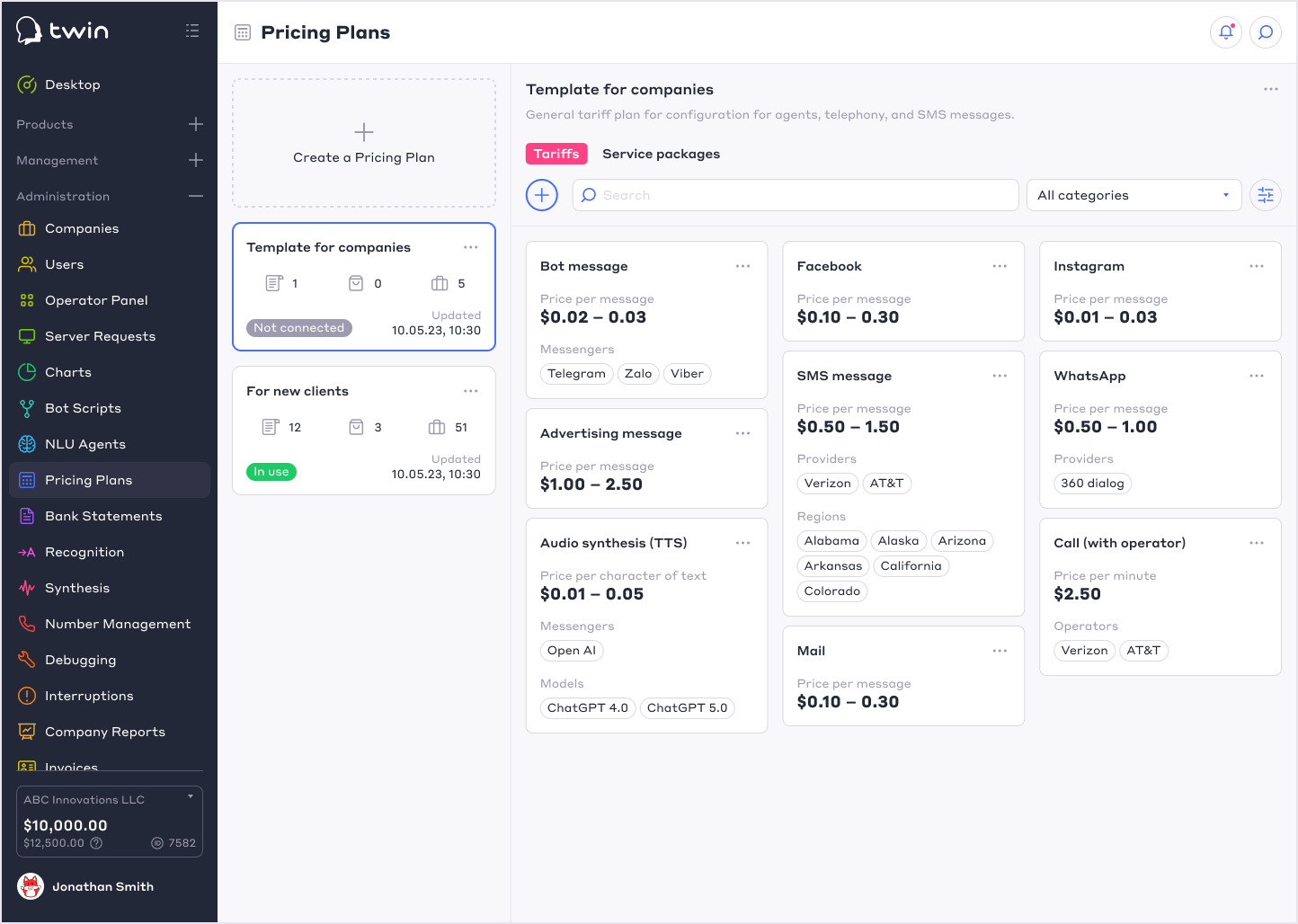
TWIN Billing System is an internal product module for managing billing plans, service packages, usage-based pricing, and provider-specific billing rules across the platform.
The billing system was designed to support different communication services, including telephony, SMS messaging, messenger notifications, speech recognition, text-to-speech services, and other tools used for pricing communication-related product features.
The system allows administrators to configure billing plans, enable or disable service packages, and set pricing tiers based on the number of messages, notifications, calls, AI-service units, and other communication-related usage metrics.
My task was to design the interface from scratch, using backend capabilities and business requirements as the main input.
🎯Main Goals
I focused on several key tasks:
- Design a clear interface for managing billing plans and pricing rules
- Support different types of services, regions, companies, and service providers
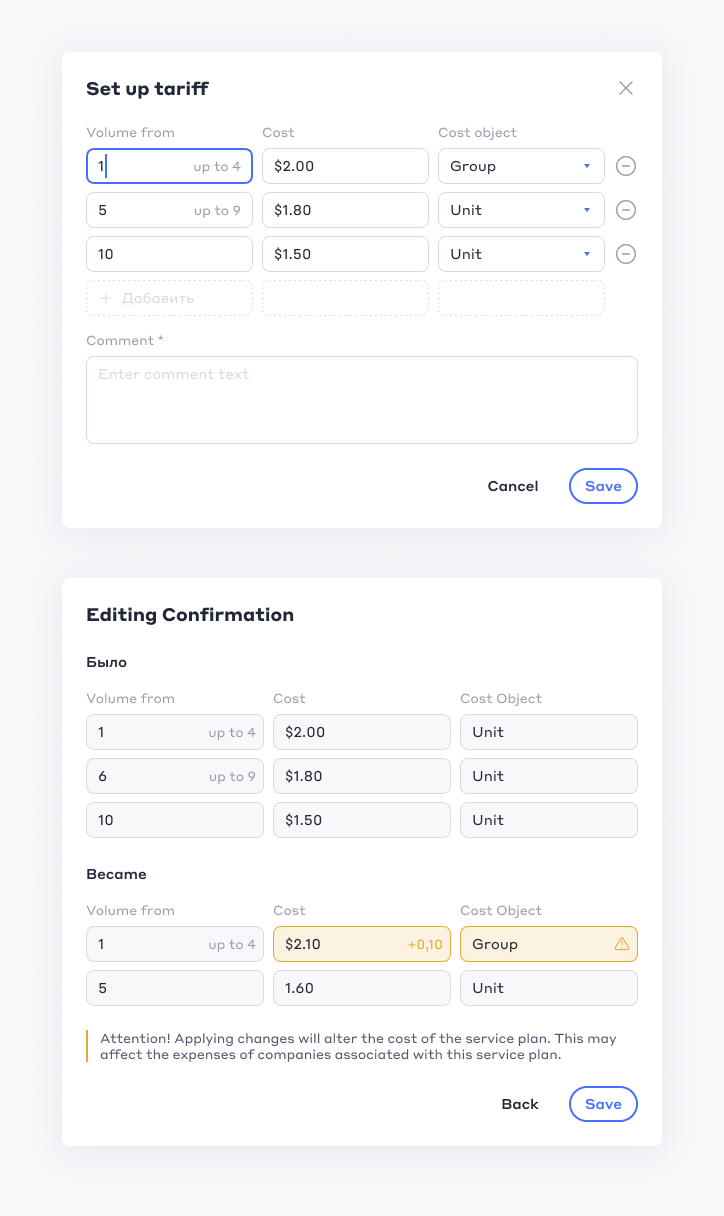
- Make usage-based pricing tiers easy to create, edit, and compare
- Show service quantities, limits, and costs in a transparent way
- Reduce the risk of user errors during billing configuration
- Make changes traceable and easier to review before applying them
- Build a scalable interface that could support future billing scenarios
🚩 Problem
The main challenge was the complexity of billing administration.
TWIN had to support many billing plans for different companies, regions, service providers, and service types. The pricing logic covered multiple communication services, including calls, SMS, messenger notifications, speech recognition, text-to-speech, and other billable units.
This created a high risk of mistakes: incorrect pricing, wrong package settings, missing limits, duplicated rules, or unexpected costs.
For administrators, managing this manually was difficult and time-consuming. Even a small configuration error could lead to financial losses or unexpected expenses for clients.
The interface had to make complex billing logic easier to understand while also being safe and resistant to user errors.
✅️ Solution
I designed a universal billing management interface that allowed administrators to build billing plans for different business scenarios.
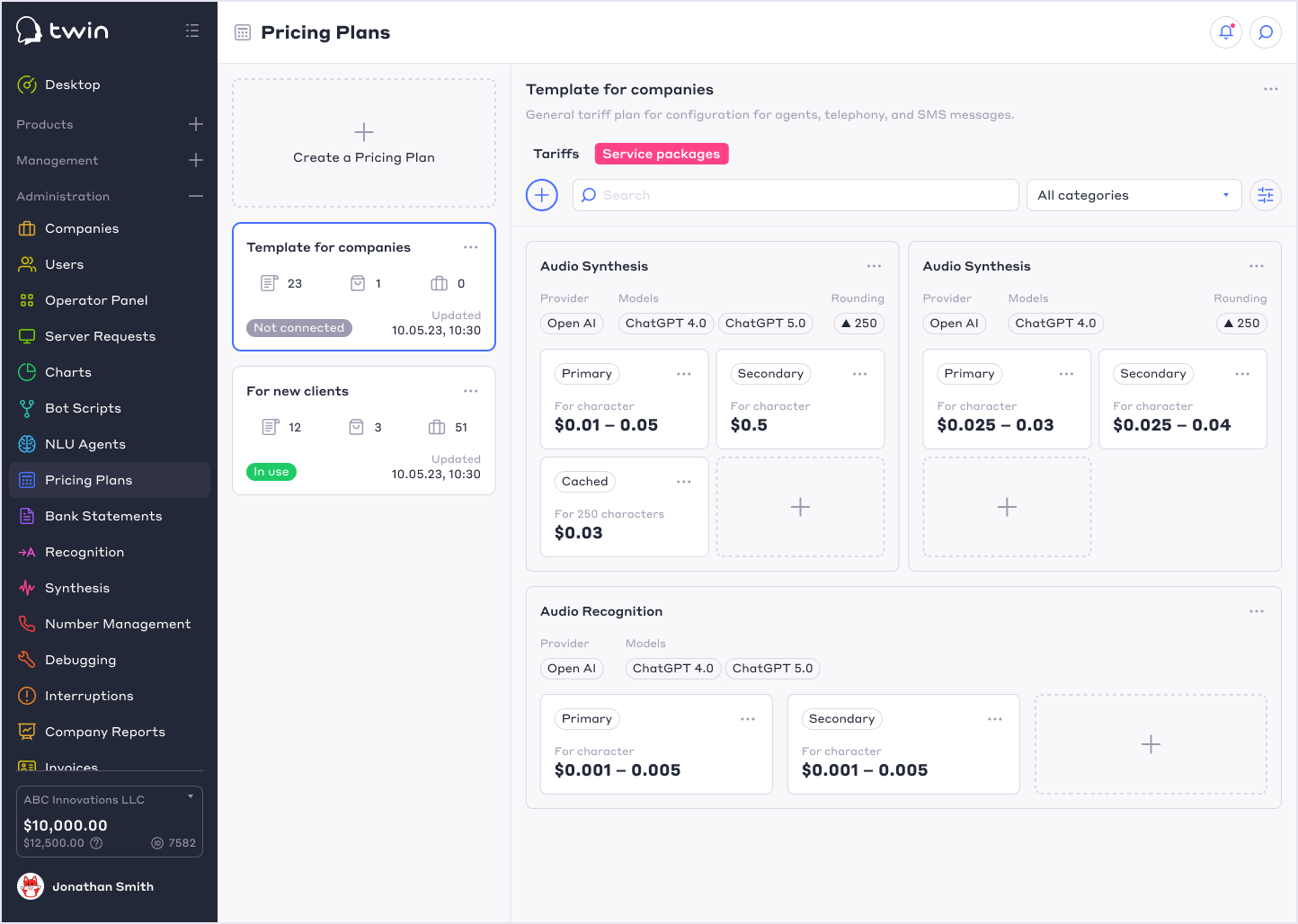
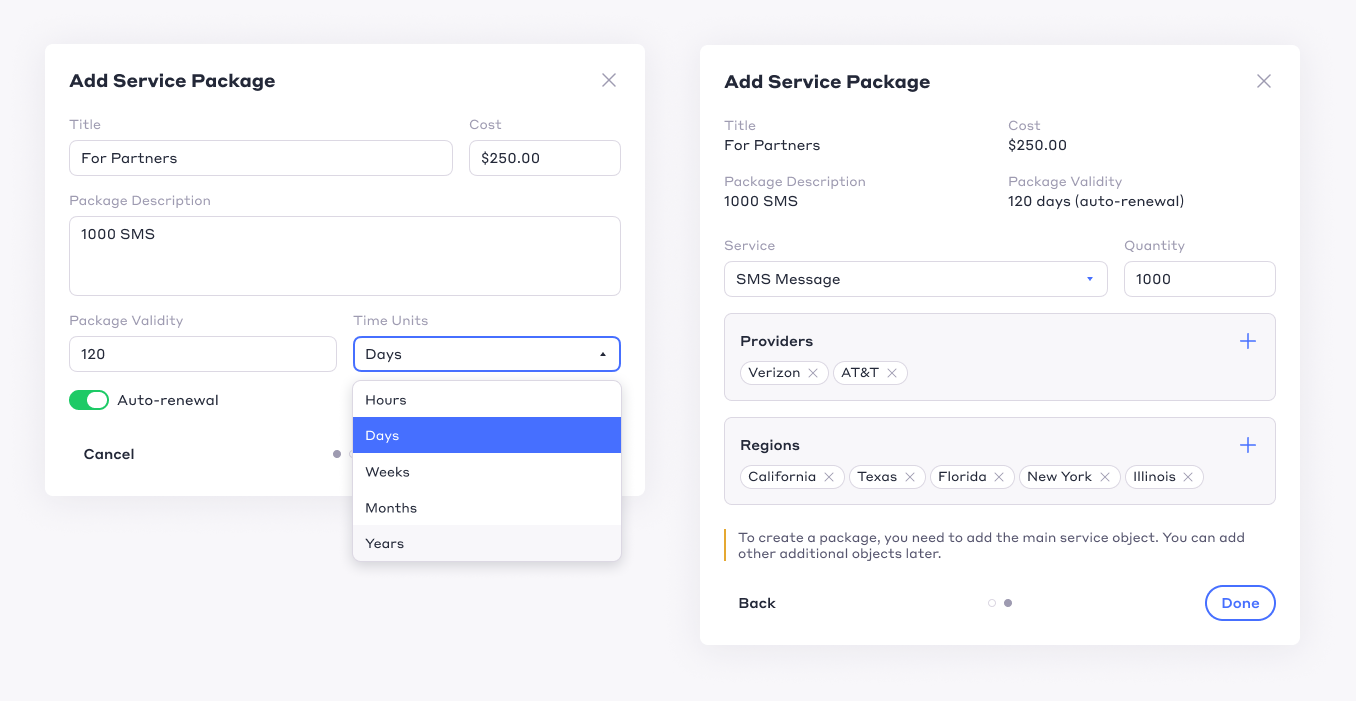
The interface was focused on clarity and control. Users could see the structure of a billing plan, manage service packages, edit usage-based pricing tiers, and understand how different units affected the final cost.
I paid special attention to transparency: the system had to clearly show what was changed, how pricing was structured, and how different service quantities affected the billing model.
The design also supported safer editing. Important actions were made more explicit, configuration areas were separated by meaning, and the user could review key changes before applying them.

📊 Result
As a result, TWIN received a flexible billing management system for configuring billing plans, service packages, usage-based pricing, and provider-specific billing rules.
The interface helped administrators manage complex pricing structures more clearly and reduced the risk of costly configuration mistakes.
For the platform, this became an important operational tool: it allowed TWIN to support different companies, regions, providers, and service models within one scalable billing interface.